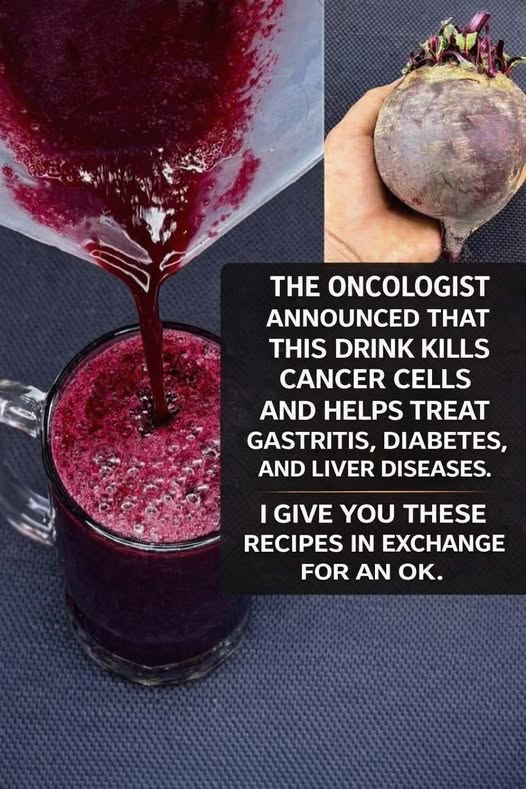
Headlines claiming “Beetroot juice kills cancer cells in 42 days” have gone viral across blogs and social media. While beetroot is undeniably nutritious, such statements oversimplify science and risk giving false hope to people facing serious illness.
Let’s separate myth from medical reality — and explain what beetroot juice can and cannot do.
🌱 What Makes Beetroot Juice Special?
Beetroot (Beta vulgaris) is rich in powerful plant compounds, including:
-
Betalains – potent antioxidants responsible for beetroot’s deep red color
-
Nitrates – improve blood flow and oxygen delivery
-
Polyphenols – help reduce oxidative stress
-
Vitamin C, folate, potassium, iron
These nutrients support general health and may help the body defend itself against chronic disease.
🔬 What Science Actually Says About Beetroot and Cancer
1. Antioxidant Protection (Not a Cure)
Laboratory studies show that betalains can reduce oxidative damage to cells, which is linked to cancer development. Antioxidants help protect DNA — but protection is not the same as destroying cancer cells in humans.
2. Anti-Inflammatory Effects
Chronic inflammation increases cancer risk. Beetroot compounds may lower inflammatory markers, which could contribute to long-term disease prevention.
3. Lab Studies vs. Human Reality
Some test-tube studies found beetroot extracts slowed cancer cell growth in controlled environments. However:
-
Test-tube results ≠ real human outcomes
-
Dosages used are far higher than dietary intake
-
No clinical trials confirm cancer elimination in people
👉 This is where many online claims go wrong.
🚫 The Dangerous Problem With “42-Day Cure” Claims
Cancer does not work on a timer.
There is:
-
No biological mechanism proving a 42-day window
-
No peer-reviewed study confirming beetroot juice as a cure
-
No oncology guideline recommending beetroot juice alone
People who delay chemotherapy, surgery, or radiation based on such claims risk disease progression and reduced survival.
✅ What Beetroot Juice May Genuinely Help With
Used responsibly, beetroot juice may support the body in several ways:
✔️ Supporting Blood Health
Beetroot improves circulation and oxygen delivery — helpful for fatigue and recovery.
✔️ Liver Detox Support
Its antioxidants support liver enzymes involved in detoxification, helping the body eliminate harmful substances.
✔️ Immune System Support
Nutrients like vitamin C and iron contribute to immune resilience during illness.
✔️ Complementary Nutrition
Many cancer patients use beetroot juice alongside medical treatment, not instead of it.
🥤 How to Use Beetroot Juice Safely
If you choose to include beetroot juice in your diet:
-
Limit to ½–1 cup per day
-
Combine with carrot, apple, or ginger to reduce sugar spikes
-
Avoid if you have kidney stones (high oxalates)
-
Always consult your doctor during cancer treatment
🧠 Why These Myths Spread So Fast
People are desperate for hope — especially when facing cancer.
Unfortunately:
-
Sensational headlines attract clicks
-
Natural cures sound safer than medical treatment
-
Social media rewards shock over accuracy
But false hope can be more dangerous than no hope at all.
🧬 The Bottom Line
Beetroot juice is:
✔ Nutritious
✔ Anti-inflammatory
✔ Antioxidant-rich
But it is NOT:
❌ A cancer cure
❌ A replacement for medical treatment
❌ Guaranteed to kill cancer cells in any number of days
Real healing happens when nutrition, medical science, and honest information work together.
