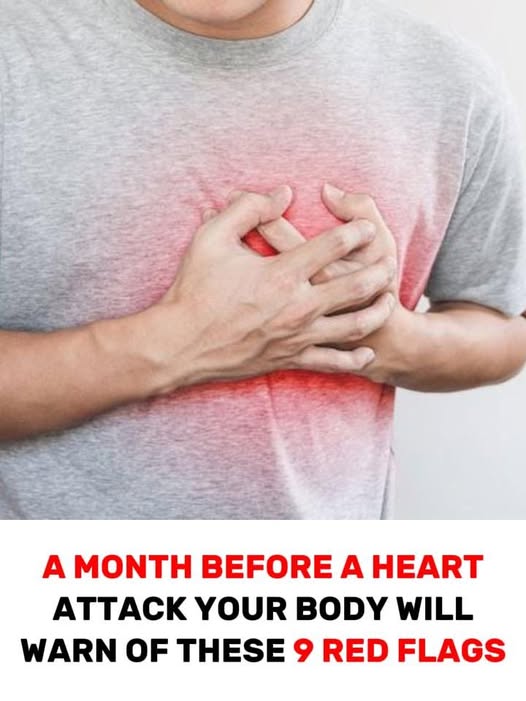
One Month Before a Heart Attack, Your Body Will Alert You: Here Are the 6 Symptoms
Heart attacks rarely happen without warning. In many cases, the body begins sending subtle — and sometimes not-so-subtle — signals weeks before a major cardiac event occurs. Unfortunately, these early symptoms are often ignored, misunderstood, or attributed to stress, aging, or minor illnesses. Recognizing these warning signs early can be life-saving, allowing time to seek medical help and prevent serious damage to the heart.
Here are six common symptoms that may appear up to one month before a heart attack, and why you should never ignore them.
1. Unusual Fatigue That Doesn’t Go Away
One of the earliest and most overlooked warning signs is persistent, unusual fatigue. This isn’t the normal tiredness after a long day — it’s a deep exhaustion that doesn’t improve with rest.
You may feel:
- Extremely tired after light activity
- Drained even after a full night’s sleep
- Unable to complete daily tasks without resting
This happens because reduced blood flow to the heart means the heart must work harder, leaving less energy for the rest of the body. Many people, especially women, report severe fatigue weeks before a heart attack.
Why it’s dangerous: Chronic fatigue can signal that your heart is struggling to pump efficiently.
2. Shortness of Breath
If you find yourself breathing harder than usual, even during simple activities like walking, climbing stairs, or talking, this could be a serious warning sign.
Shortness of breath may occur:
- With or without chest discomfort
- While resting or lying down
- Suddenly and repeatedly
When arteries supplying the heart begin to narrow, the heart receives less oxygen-rich blood. This affects oxygen circulation throughout the body, leading to breathlessness.
Why it’s dangerous: It often indicates reduced heart function and may appear weeks before a heart attack.
3. Chest Discomfort or Pressure (Not Always Pain)
Chest pain is the most well-known symptom of a heart attack, but early chest symptoms can be mild and easy to dismiss.
You might feel:
- Pressure, tightness, or fullness
- Burning or squeezing sensations
- Discomfort that comes and goes
These sensations may last a few minutes and then disappear, leading people to ignore them. Some mistake it for indigestion, gas, or muscle strain.
Why it’s dangerous: Intermittent chest discomfort can be a sign of blocked or narrowing coronary arteries.
4. Sleep Disturbances and Anxiety
Many people report changes in sleep patterns weeks before a heart attack. This may include:
- Difficulty falling or staying asleep
- Waking up suddenly with anxiety
- Night sweats or restlessness
Unexplained anxiety or a sense of impending doom can also occur. While anxiety disorders are common, sudden or unusual anxiety without a clear cause should raise concern.
Why it’s dangerous: Stress hormones and poor sleep can further strain the heart, increasing risk.
5. Digestive Issues: Nausea, Indigestion, or Abdominal Pain
Heart-related symptoms don’t always appear in the chest. Some people experience digestive discomfort instead.
Possible signs include:
- Nausea or vomiting
- Bloating or heartburn
- Pain in the upper abdomen
These symptoms are more common in women and older adults and are frequently misdiagnosed as stomach problems.
Why it’s dangerous: Digestive symptoms can mask cardiac distress, delaying treatment.
6. Pain in the Arms, Neck, Jaw, or Back
Pain associated with heart problems often radiates beyond the chest.
You may feel:
- Aching or numbness in the left arm (sometimes both arms)
- Pain in the neck, jaw, shoulders, or upper back
- Discomfort that appears gradually
This pain may come and go and doesn’t always feel sharp. Many people ignore it, assuming it’s due to posture or muscle strain.
Why it’s dangerous: Radiating pain is a classic sign of heart-related nerve involvement.
Why These Symptoms Are Often Ignored
Many early heart attack symptoms are:
- Mild or intermittent
- Different from what people expect
- Similar to everyday problems like stress or indigestion
Because of this, people delay seeking help — sometimes until it’s too late.
What You Should Do Immediately
If you notice one or more of these symptoms, especially if they persist or worsen:
- Do not ignore them
- Schedule a medical check-up immediately
- Seek emergency care if symptoms intensify
Early detection can prevent a heart attack or significantly reduce its severity.
Final Thoughts
Your body is remarkably intelligent and often warns you before a major health crisis. A heart attack rarely comes without signals — but it’s up to you to listen. Fatigue, breathing problems, chest discomfort, sleep disturbances, digestive issues, and radiating pain are not normal signs to brush aside.
Pay attention to your body. Acting early could save your life or the life of someone you love.
